 Osteora
Osteora
Osteora
Kazakhstan's medical device sector is undergoing a rapid technological evolution. Driven by national healthcare initiatives, expanding private healthcare infrastructures in metropolitan hubs like Almaty, Astana, and Shymkent, and a national push to promote athletic fitness, the demand for advanced sports medicine and joint reconstruction solutions is at an all-time high. Clinical professionals and distributors across the country are seeking reliable partners capable of supplying high-performance, cost-effective implants that meet EAEU (Eurasian Economic Union) regulatory frameworks.
From the high-altitude sports training facilities of Medeu to the competitive athletic arenas in Astana, sports-related injuries—specifically anterior cruciate ligament (ACL) tears, meniscus lesions, and acromioclavicular instabilities—are highly prevalent. Historically, Kazakhstan relied heavily on Western European and North American imports for arthroscopic procedures. However, procurement bottlenecks, high costs, and supply chain vulnerabilities have forced public and private clinical institutions to transition to high-precision alternatives from manufacturing hubs like China.
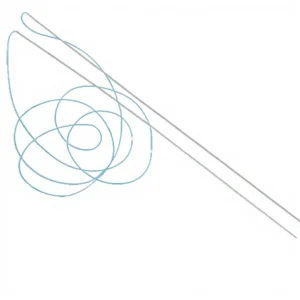
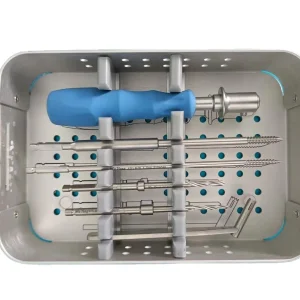
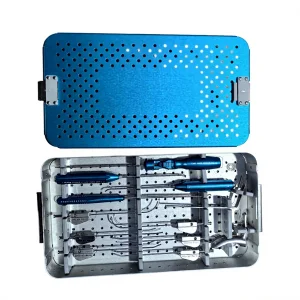
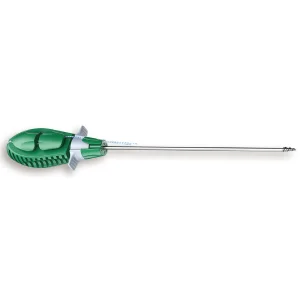
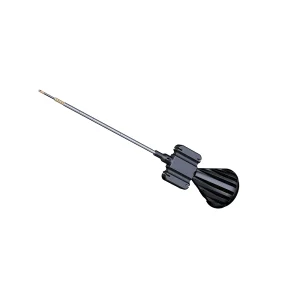
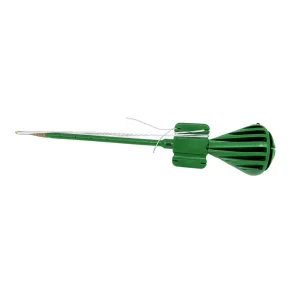
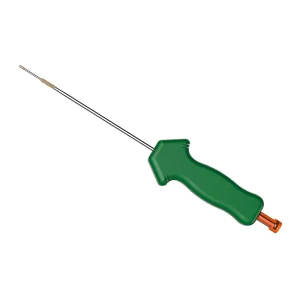
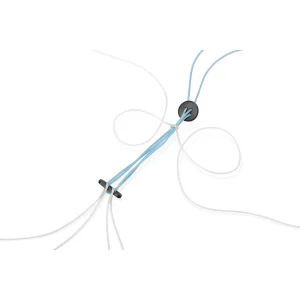
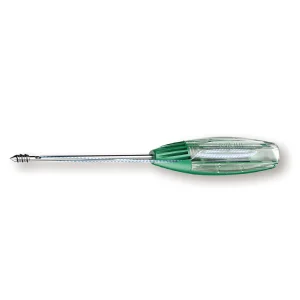
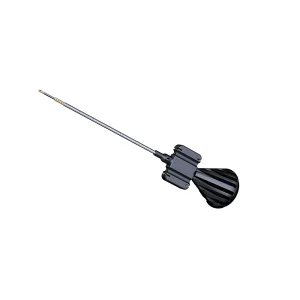
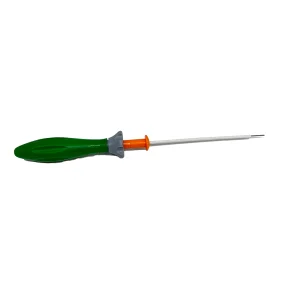
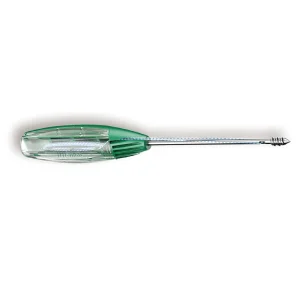
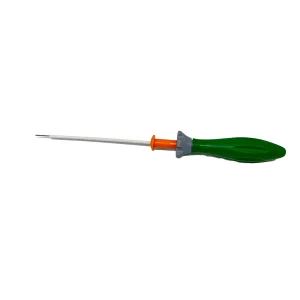
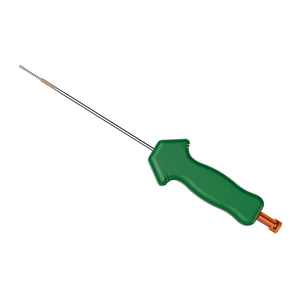
Our localized solutions focus on matching the specific clinical requirements of Kazakh orthopedic departments. For instance, the transition to minimally invasive surgical procedures requires complete, specialized surgical kits that include high-precision instruments and robust implants. Products such as our ATFL Repair System and All-Inside Meniscal Staplers enable surgical teams in Kazakhstan to minimize operating times, reduce post-operative recovery periods, and improve overall patient outcomes.
Accessing the Kazakh market requires absolute compliance with local and Eurasian Economic Union (EAEU) regulatory pathways. Navigating the regulatory landscape from the Ministry of Healthcare of the Republic of Kazakhstan (NCELS) requires extensive technical documentation, verified clinical testing data, and certified manufacturing standards.
As a global leader, Osteora Medical Devices Co., Ltd. holds strict quality certifications including ISO 13485. Our production processes meet Class III medical device standards, ensuring that all biological compatibility validation protocols, biomechanical fatigue tests, and dimensional measurement reports are readily available for registration processes. This mitigates the registration risks faced by local distributors in Central Asia, ensuring stable customs clearance and compliance under the unified EAEU market regulations.
Partnering with Osteora provides Kazakh distributors with an unmatched combination of clinical precision and pricing efficiency. With an integrated manufacturing facility spanning 18,500㎡, we leverage advanced machinery, including Swiss-type CNC lathes and HAAS machining centers, to achieve tolerances within micrometric levels.
Our supply chain robustness is driven by relationships with over 1,200 certified upstream and downstream partners. This prevents supply chain disruptions, assuring consistent availability of specialized surgical items. For corporate buyers, hospitals, and medical distributors in Kazakhstan, this translates to predictable delivery schedules, custom OEM/ODM packaging options, and significant cost savings without sacrificing patient safety.
Our Class 100,000 cleanrooms and advanced mechanical verification labs ensure every batch of implants conforms to the rigorous clinical safety standards required in Kazakhstan and globally.


Modern sports medicine relies heavily on material science to achieve optimal healing rates, minimal inflammatory reactions, and adequate tensile retention during the rehabilitation cycle. At Osteora, we prioritize three core material families configured for the demanding physical stresses of joint reconstruction:
Our PEEK suture anchors represent the pinnacle of inert polymer fixation. Unlike titanium implants, PEEK features an elastic modulus extremely close to cortical bone. This minimizes stress-shielding, avoiding bone resorption around the implant site. Additionally, PEEK provides artifact-free post-operative MRI imaging, a critical asset for sports medicine surgeons in Almaty tracking tissue integration and ligament healing.
Engineered from PLLA-b-TCP (Poly-L-lactic acid and Beta-Tricalcium Phosphate), our absorbable suture anchors serve as temporary structural scaffolds. As the polymer degrades organically over 18 to 24 months, the tricalcium phosphate induces local osteoconduction, encouraging natural bone replacement in the drill hole. This is the optimal clinical pathway for young, highly active athletes seeking revisions and long-term joint health.
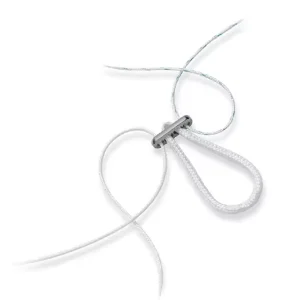
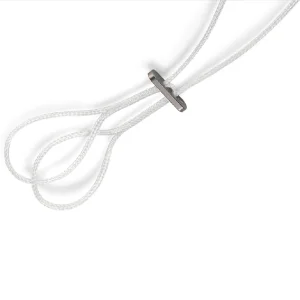
For high-load fixations like cortical button suspensions or ACL reconstruction loops, our titanium buttons and locking plates offer unparalleled yield strength and structural integrity. Micro-stamped and laser marked, each titanium component undergoes strict passivation and cleaning protocols to guarantee chemical cleanliness and long-term osteointegration.
Medical procurement officers, tender agents, and distributors in Kazakhstan must look forward to align their inventory with surgical trends. The shift away from generic steel trauma plates to specialized arthroscopic solutions is accelerating. Below are key areas shaping the procurement decisions of leading Kazakh hospitals and clinics:
Surgeons in Kazakhstan are increasingly demanding tools that support keyhole arthroscopic procedures. The clinical advantages—reduced hospitalization time, minimal soft-tissue scarring, and faster return to work—fit the needs of both the public healthcare budget and private patients. Stocking complete systems like our All-Inside Meniscal Stapler secures a competitive edge for local distributors entering hospital tenders.
For established medical brands in the CIS region, Osteora offers full OEM and ODM customization. Supported by 85 R&D engineers, we can adapt anchor sizes, thread pitches, material components, and deliver custom private-label sterile packaging. This flexibility helps local distributors differentiate their product offerings in public bids and tender processes.
We maintain full ISO 13485 quality systems and construct comprehensive technical files (including bio-compatibility, sterility validation, and fatigue mechanical profiles) to assist local distributors with the NCELS and unified EAEU registration processes in Kazakhstan.
Yes. With an in-house engineering team of 85 R&D personnel, we provide comprehensive OEM/ODM options, adjusting dimensions, materials (PEEK, Biocomposite, Titanium), thread profiles, and sterilization packaging to suit regional orthopedic needs.
Our facility houses 42 dedicated quality assurance inspectors. We conduct 100% in-process visual checks, coordinate fatigue resistance testing on multifunctional mechanical testing rigs, and deploy Vickers hardness testers and gas spectrometers to verify raw material purity before cleanroom packaging.
Backed by a network of 1,200 downstream/upstream partners, we maintain a robust production flow. Standard manufacturing lead times vary from 15 to 45 days depending on customization complexity and registration timelines. Our annual export capacity ranges between USD 6 million and 14 million.
Our PEEK and Biocomposite absorbable suture anchors are completely non-magnetic and inert, producing zero artifacts on post-operative MRI scans, which provides surgeons in Kazakhstan with precise views of healing tendon and cartilage tissue.
Partner with an industry-certified manufacturer offering over 12 years of clinical research experience, high-precision CAD engineering, and comprehensive compliance documentation.
Send Inquiry Now