Osteora Osteora

Why Choose Spinal Internal Fixation Systems?

Time:2026-11-15 Author:Henry
0%

Spinal Internal Fixation Systems help surgeons stabilize the spine when movement, injury, or structural change threatens alignment. They may include rods, screws, plates, or cages, selected according to the patient’s anatomy and treatment plan. The need is substantial: the World Health Organization reported that low back pain affected 619 million people worldwide in 2020, with cases projected to reach 843 million by 2050. This figure describes low back pain, not the number of people who need surgery. That distinction matters.

For appropriate patients, fixation can support spinal fusion and help maintain stability while bone heals. A surgeon may consider it for conditions such as fractures, deformity, or instability, after weighing symptoms, imaging, health history, and non-surgical options. The North American Spine Society’s clinical guidance also reflects a case-specific approach: recommendations vary by diagnosis and patient circumstances. Hardware alone does not guarantee pain relief or successful fusion. Not even close.

Device design is only part of the decision. Material, screw placement, construct strength, surgical technique, and follow-up all matter. So do risks, including infection, nerve injury, and failure of fusion. Patients should ask what the system is intended to address, which alternatives are reasonable, and how outcomes will be monitored. These are not small questions. Evidence and experience can guide the choice, but no system is right for every spine. WHO’s 2023 low-back-pain fact sheet and current clinical guidance provide useful context; individual decisions still belong with qualified clinicians.
Why Choose Spinal Internal Fixation Systems?

What Spinal Internal Fixation Systems Are

Why Choose Spinal Internal Fixation Systems?

What Spinal Internal Fixation Systems Are

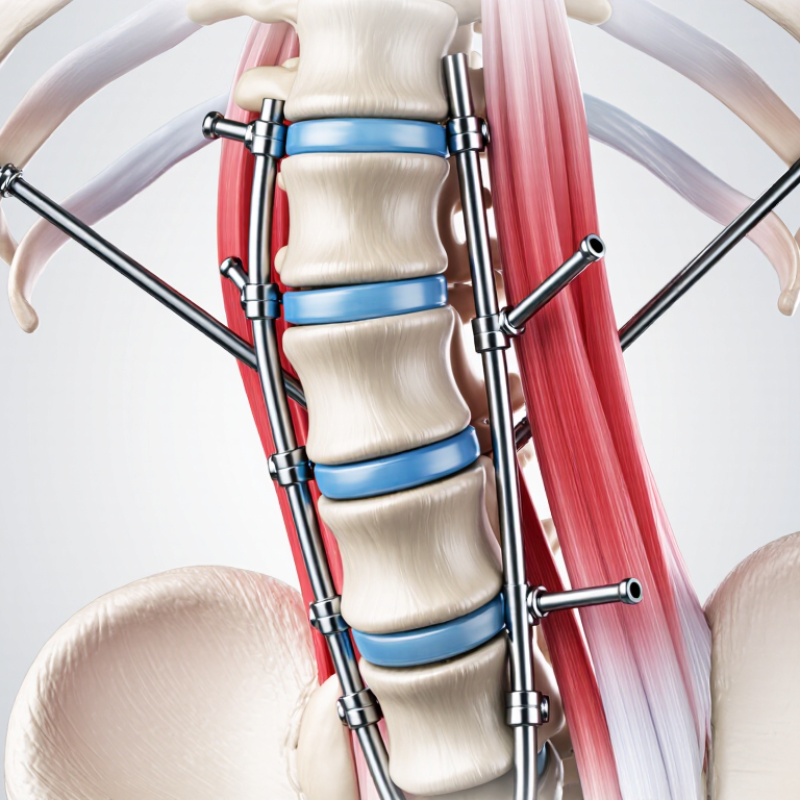
Spinal internal fixation systems are medical implants placed during surgery to help stabilize part of the spine. Depending on the procedure, they may include screws, rods, plates, hooks, or connectors. Some operations also use an implant between vertebrae to support the space where a disc was removed. The exact setup depends on the spinal level, the patient’s anatomy, and the surgeon’s plan.

These devices can limit unwanted movement and help maintain alignment while bone heals, often after a spinal fusion. A rod may connect screws placed in neighboring vertebrae; small locking caps secure the connection. The hardware is not the healing itself. Bone growth and careful follow-up matter too. Implants are commonly made from materials such as titanium alloys, but material choice varies. Imaging helps clinicians check placement and monitor progress. It is worth remembering that a stable-looking construct does not guarantee the same outcome for every patient. Risks, recovery time, and suitability depend on individual health and diagnosis, so a qualified spine specialist should explain the options.

Conditions Treated and Goals of Stabilization

Why Choose Spinal Internal Fixation Systems?

Conditions Treated and Goals of Stabilization

Spinal internal fixation systems may be considered when a vertebra is unstable, fractured, or at risk of shifting. They can also support treatment for some spinal deformities and degenerative conditions, particularly when instability accompanies nerve compression. A surgeon assesses symptoms, physical findings, and imaging before recommending fixation. The goal is to hold affected bones in a steadier position, often while a fusion heals. Pain matters, but fixation does not guarantee pain relief. The source of symptoms and a person’s overall health both influence results.

Tips: Ask what problem the procedure is meant to address and how success will be measured. Discuss activity limits, healing time, and possible complications. Bring a list of medicines and questions to your appointment.

Depending on the condition, screws and connecting rods may limit movement between selected vertebrae. This can help maintain alignment and reduce motion at an unstable area. For a fracture, stabilization may support healing; for deformity, it may help correct or preserve alignment. The plan varies. Some people need additional procedures, and recovery can take months. Even a carefully planned operation has trade-offs, so patients should discuss non-surgical options and realistic expectations with a qualified spine specialist. Pain may persist, and follow-up imaging may be needed.

How Implants Support Spinal Healing

Why Choose Spinal Internal Fixation Systems?
How Implants Support Spinal Healing

Spinal internal fixation systems use screws, rods, or plates to steady selected vertebrae. They help maintain alignment and limit movement while bone healing progresses. In spinal fusion surgery, this support can give bone graft material a more stable setting. The implants do not create new bone or guarantee fusion. Healing takes time. It also varies from person to person.

Recovery depends on factors such as overall health, bone quality, the procedure, and following the care plan. Clinicians may use follow-up visits and imaging to check alignment and healing. New or worsening pain, weakness, fever, or wound changes should be discussed promptly with a qualified clinician. It is easy to expect a straight path to recovery, but progress can be uneven. That uncertainty deserves honest discussion before surgery, including possible benefits, risks, and alternatives.

Tips: Follow your surgeon’s movement and wound-care instructions. Avoid changing activity or medication plans on your own. Keep follow-up appointments, even when you feel better. If instructions are unclear, ask the care team to explain them in practical terms.

Why Choose Spinal Internal Fixation Systems? How Implants Support Spinal Healing

Screws and rods help stabilize the spine while bone grows across the fusion site. The timeline shown is illustrative: healing phases can overlap, and the pace of fusion varies by patient and procedure. Implants support stability but do not guarantee fusion.

Factors That Guide System Selection

System selection starts with the patient and the planned procedure, not the implant catalog. Surgeons assess the spinal level, instability pattern, anatomy, bone quality, and need for decompression or fusion. They also consider screw dimensions, rod contour, construct stiffness, imaging needs, and compatibility with other planned care. A system must fit the anatomy and surgical approach. More fixation is not automatically better.

Bone quality can change the risk profile. A systematic review in Global Spine Journal reported pooled pedicle-screw loosening rates of 22.5% in patients with osteoporosis and 2.5% in those without it. These figures come from pooled studies, not a prediction for an individual. Still, they support careful bone-health assessment and realistic discussion of fixation risks. Real cases are messier than a checklist suggests; surgeon experience and patient-specific judgment matter.

Tips: Review bone-density results and preoperative imaging. Confirm that available screw sizes suit the vertebrae and planned trajectory. Ask how the proposed construct addresses the patient’s specific instability, and what trade-offs it introduces. A clear rationale beats choosing the most complex system.

Potential Benefits, Risks, and Alternatives

Why Choose Spinal Internal Fixation Systems? Potential Benefits, Risks, and Alternatives

Spinal internal fixation uses screws, rods, or plates to stabilize selected spinal segments. Surgeons may consider it when instability, deformity, fractures, or a planned fusion make extra support appropriate. The aim is practical: limit movement while bone heals. It is not a universal solution for back pain. The uncomfortable point: more hardware does not automatically mean better results.

Benefits depend on the diagnosis and procedure. In the eight-year SPORT analysis of lumbar spinal stenosis, surgery was associated with an 11.6-point greater improvement in bodily pain and an 8.2-point greater reduction in disability than nonoperative care (Weinstein et al., Spine, 2015). These figures describe surgery for stenosis, not the independent benefit of fixation. That distinction matters. The study also had treatment crossover, so the results need careful interpretation.

Risks include infection, bleeding, nerve injury, nonunion, and screws or rods loosening or breaking. Fusion may also increase stress on nearby spinal levels, and some patients need another operation. Alternatives can include physical therapy, medication, activity changes, injections, or decompression without fusion, depending on the cause of symptoms. Ask what problem fixation is meant to solve, what improvement is realistic, and what happens without it. A second opinion can help when the answer feels unclear.

Why Choose Spinal Internal Fixation Systems? — Potential Benefits, Risks, and Alternatives

Treatment option What it involves Potential benefits Risks and limitations When it may be considered
Internal fixation with spinal fusion Screws, rods, plates, or other implants stabilize selected vertebrae while bone graft material is used to encourage fusion. Can provide immediate mechanical stability, help maintain spinal alignment, and support healing when instability or deformity is present. Possible complications include infection, bleeding, nerve or blood-vessel injury, blood clots, implant loosening or breakage, nonunion, and persistent symptoms. Fusion reduces motion at the treated levels and does not guarantee pain relief. May be considered for certain fractures, instability, deformity, or conditions requiring fusion after other treatments have been assessed.
Decompression without fixation Surgery removes or reshapes tissue that is compressing spinal nerves, without placing fixation implants or intentionally fusing vertebrae. May relieve nerve-related symptoms while preserving more motion than fusion when the spine is sufficiently stable. Does not address significant instability or deformity; symptoms can persist or recur, and surgery carries general procedural risks. Removing too much supporting bone or tissue may contribute to instability. May be an option when nerve compression is the main problem and the spine is judged stable.
Non-surgical care May include guided exercise or physical therapy, activity adjustments, medicines, and selected injections, based on the diagnosis and individual health needs. Avoids surgical and implant-related risks; can improve function and symptoms for some people. May not correct structural instability, severe deformity, or certain fractures. Improvement can be incomplete, and some treatments have their own side effects. Often considered before elective surgery when there is no urgent need for an operation and symptoms permit a trial of conservative care.
Motion-preserving procedures In selected cases, a procedure such as artificial disc replacement is used to preserve motion at a treated level rather than fuse it. May preserve motion at the operated level and avoid fusion at that level in appropriately selected patients. Not suitable for every diagnosis or spinal level; devices and procedures have specific risks, and long-term outcomes vary by patient and indication. May be discussed for selected patients with certain disc conditions after specialist assessment.
Important: The right approach depends on the diagnosis, spinal stability, symptoms, overall health, and patient preferences. Internal fixation stabilizes the spine but does not by itself ensure bone fusion or eliminate pain. Discuss expected benefits, alternatives, and individual risks with a qualified spine specialist.

FAQS

When might spinal fixation be considered?

It may be considered when a vertebra is unstable, fractured, or at risk of shifting. Some deformities and degenerative conditions may also involve instability.

What is the main goal of fixation?

Screws and rods can steady selected vertebrae and limit movement. This may support alignment while a fusion heals.

Does fixation guarantee pain relief?

No. Pain can persist, and results depend on the symptom source and overall health. That part is easy to underestimate.

How do surgeons choose a fixation system?

They consider spinal level, anatomy, bone quality, and the planned procedure. Screw size and rod shape matter too.

Does a more complex system always work better?

No. The system should fit the patient and surgical plan. More fixation is not automatically better.

How can bone quality affect fixation?

Weaker bone may increase the risk of screws loosening. One review reported different rates for people with and without osteoporosis, but those figures cannot predict an individual’s outcome.

What should patients ask before surgery?

Ask what problem the procedure targets and how success will be measured. Discuss activity limits, healing time, complications, and non-surgical options.

What might recovery and follow-up involve?

Recovery can take months, and some people need additional procedures. Follow-up imaging may be needed. Plans can be less tidy than expected.

Conclusion

Spinal Internal Fixation Systems are implants, such as rods, screws, plates, or cages, used to support the spine when it needs added stability. They may be considered for conditions such as fractures, spinal deformity, degenerative changes, or instability. The goal is to help maintain alignment and limit unwanted movement while the affected area heals; the implants support the spine but do not heal tissue on their own.

Choosing a system depends on the condition, the part of the spine involved, bone quality, overall health, and the surgeon’s treatment plan. Potential benefits may include improved stability and support, while risks can include infection, bleeding, implant-related problems, or the need for further treatment. Depending on the diagnosis, alternatives may include medication, rehabilitation, activity adjustments, or other procedures. A qualified clinician can explain which options are appropriate and discuss their expected benefits and risks.

Henry

Henry

Henry is a dedicated marketing professional with a profound expertise in the company's offerings. With years of experience in the industry, he possesses an impressive understanding of the market dynamics and consumer behaviors that drive success. Henry is committed to sharing his insights through......