Osteora
Why Choose Cortical Screws for Orthopedic Surgery?
Cortical Screws remain important tools in fracture fixation and reconstructive orthopedic procedures. Their fine threads engage dense cortical bone, creating firm purchase near the outer bone shell. This design can support plate fixation, lag compression, and selected bicortical applications. However, their value depends on anatomy, fracture pattern, bone quality, and surgical technique.
Orthopedic trauma pioneer Dr. Maurice E. Müller stated, “The aim of internal fixation is to restore the function of the injured limb.” That principle explains why implant selection should serve biological healing, not simply mechanical strength. In practice, a surgeon may select a cortical screw when its thread profile matches the patient’s cortical structure. Proper drilling, measured depth, and controlled tightening remain essential. A screw placed too deeply may irritate soft tissue or compromise nearby structures.
Small details matter.
Clinical experience also shows that cortical screws are not automatically superior. Osteoporotic bone, comminuted fractures, and unusual anatomy may require different fixation strategies. In some cases, combining cortical and cancellous screws provides a more appropriate mechanical balance. Evidence should guide the decision, but evidence alone cannot replace careful intraoperative judgment.
A reliable discussion of Cortical Screws must include both strengths and limitations. They can offer predictable fixation in suitable cortical bone, yet their performance depends heavily on placement accuracy. Surgeons should evaluate imaging, bone density, loading demands, and healing potential before choosing them. The best option is rarely the most aggressive one. It is the option that supports stability while respecting the patient’s biology.
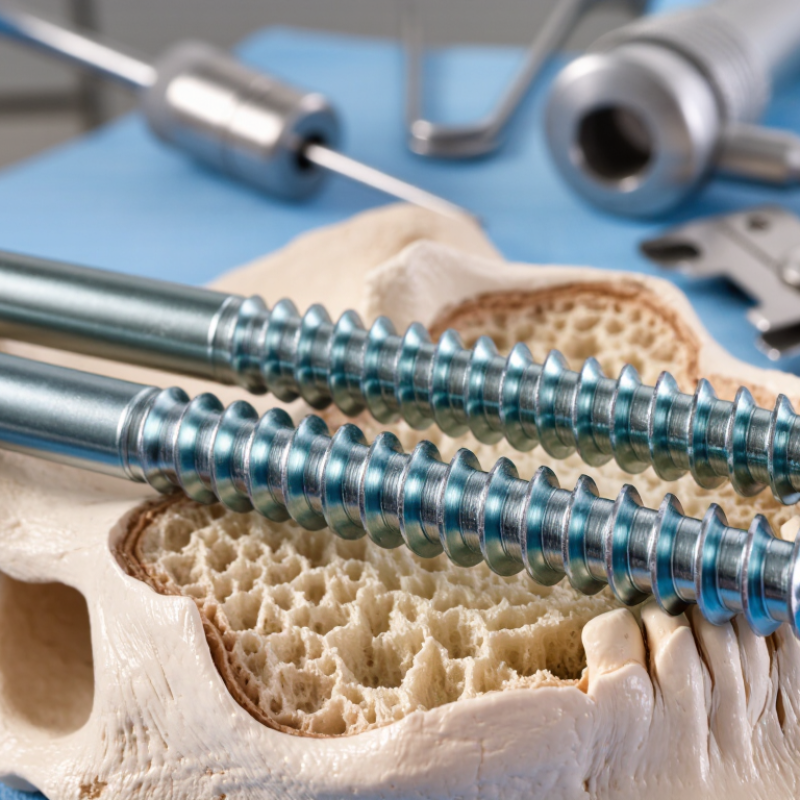
Cortical screws are fixation devices designed to grip dense outer bone. Their threads are usually finer and closer together than cancellous-screw threads. During insertion, each thread engages the hard cortical shell, creating strong resistance against pulling and rotation. Surgeons may use bicortical fixation, allowing the screw to pass through both bone cortices. This can improve stability around fractures, plates, and small bone fragments.
Bone quality still matters. The World Health Organization’s 2022 musculoskeletal health report estimated that 1.71 billion people live with musculoskeletal conditions worldwide. The International Osteoporosis Foundation also reports that one in three women and one in five men over 50 may experience an osteoporotic fracture.
In weaker bone, a cortical screw may lose purchase despite careful placement. No screw is universally best. This is where clinical judgment matters, and outcomes are not perfectly predictable.
Tips: Surgeons should evaluate bone density, fracture pattern, screw length, and trajectory before insertion. Imaging helps confirm depth and cortical engagement. Avoid excessive tightening; it can damage the bone threads and reduce fixation strength. A 2023 systematic review in the Journal of Orthopaedic Trauma noted that stability depends on bone quality, screw diameter, and technique, not screw type alone. Small details matter. Pain, swelling, or loosening after surgery requires prompt clinical review.
Cortical screws are designed for dense, hard bone, especially near the outer shell of a bone. Their threads are usually finer and more closely spaced than cancellous screws. This design can create strong purchase in cortical bone. Cancellous screws, by contrast, often have deeper threads and wider spacing for softer, more porous bone.
The difference affects stability, insertion, and load transfer. A cortical screw may provide firm fixation with limited thread engagement. It is often selected for diaphyseal fractures, plates, and areas with dense bone. Cancellous screws may be better suited to metaphyseal regions, where bone structure is less compact. Some systems use partially threaded screws to achieve compression across a fracture. Fully threaded options can support alignment without the same compression effect. The choice is not always obvious.
Tips: Match the screw design to bone quality and fracture location. Check imaging carefully before drilling. Use controlled torque, because excessive force can damage threads or weaken fixation. Screw length matters too; insufficient purchase may reduce stability, while overpenetration can irritate nearby tissue.
In practice, fixation plans can change during surgery. Bone density may differ from preoperative scans. A technically suitable screw can still be unsuitable for a particular fracture pattern. Experienced surgical judgment remains essential. No single screw type works best in every patient.
Why Choose Cortical Screws for Orthopedic Surgery?
Key Benefits of Cortical Screws in Bone Fixation
Cortical screws are designed to engage the dense outer layer of bone. Their threads are relatively close together, helping them gain purchase in this compact tissue. When placed correctly, they can provide stable fixation for many fractures and orthopedic procedures. Stability matters. It helps limit unwanted movement while bone heals.
Their slim profile can be useful when space is limited, such as near a joint or in a small bone fragment. Surgeons select screw length, diameter, and placement based on the anatomy and the treatment plan. A screw that is too long may irritate nearby tissue; one with poor purchase may not hold securely. Small details count. Cortical screws are not automatically the best choice for every bone or fracture. Bone quality, fracture pattern, and the forces acting on the site all affect the decision. In some cases, another fixation method may be more suitable. Even experienced teams must weigh these factors carefully, because surgical hardware cannot compensate for every challenge in healing.
| Data Dimension | Cortical Screw Characteristics | Clinical Benefit or Relevance |
|---|---|---|
| Primary fixation location | Designed primarily for dense cortical bone, such as the outer cortex of long bones. | Provides effective thread purchase where bone density is relatively high. |
| Thread pitch | Usually has a finer pitch than a cancellous screw, meaning more threads are present over the same length. | Increases thread engagement with cortical bone and supports controlled fixation. |
| Thread depth | Generally features a shallower thread profile than screws intended for softer cancellous bone. | Helps match the geometry and resistance of compact cortical bone. |
| Typical thread configuration | Commonly fully threaded, although partially threaded designs are also used for specific fixation techniques. | Fully threaded designs provide continuous purchase; partially threaded designs may be selected when interfragmentary compression is required. |
| Bone purchase | Achieves fixation through engagement of the screw threads with the cortical shell. | Can provide reliable resistance to axial, shear, and rotational forces when properly sized and positioned. |
| Mechanical stability | Offers strong initial mechanical fixation in suitable cortical bone. | Supports maintenance of fracture alignment and stabilization during early healing. |
| Common orthopedic applications | Used in fracture plates, compression plating, lag-screw techniques, and selected fragment or osteotomy fixation procedures. | Versatile for fixation of diaphyseal and metaphyseal fragments when adequate cortical purchase is available. |
| Material options | Common implant materials include titanium alloys and stainless steel, depending on the device system and clinical requirements. | Material selection can influence strength, stiffness, imaging characteristics, and compatibility with the fixation system. |
| Insertion control | Requires accurate drilling, appropriate tap selection when indicated, and controlled tightening torque. | Proper technique helps reduce risks such as thread stripping, over-tightening, malposition, and cortical damage. |
| Self-tapping feature | Some cortical screws are self-tapping, but this feature depends on the specific screw design and is not inherent to every cortical screw. | May simplify insertion by reducing the need for separate tapping, when permitted by the surgical technique. |
| Compression capability | A cortical screw can function as a lag screw when the near cortex is appropriately over-drilled and the far cortex provides thread purchase. | Can generate interfragmentary compression, but the result depends on screw geometry, drilling technique, and fracture configuration. |
| Limitations | Less suitable for very soft or highly osteoporotic bone when adequate cortical purchase is not available. | Alternative fixation strategies or supplementary constructs may be necessary in compromised bone. |
| Patient-specific selection | Selection depends on bone quality, fracture pattern, anatomical site, screw diameter and length, plate design, and the intended fixation method. | Individualized planning improves the likelihood of stable fixation while minimizing avoidable complications. |
Note: Final screw selection and surgical technique should be determined by a qualified orthopedic professional according to the patient’s anatomy, bone quality, fracture characteristics, and applicable surgical guidelines.
Cortical screws are widely used when fixation must grip dense bone. Their threads engage the hard outer layer, creating strong purchase with controlled compression. This matters in diaphyseal fractures, where surgeons often combine screws with plates. A lag screw can draw two bone fragments together, reducing a visible fracture gap. The technique requires accurate drilling and careful measurement.
Cortical screws support fixation in forearm, femoral, tibial, and clavicle fractures. They are also used during corrective osteotomies, arthrodesis, and selected small-bone procedures. The AO Surgery Reference describes their role in compression plating and interfragmentary fixation. These applications remain relevant as fracture care expands. A Global Burden of Disease analysis reported 178 million new fractures worldwide in 2019.
The choice is never automatic. Bone quality, fracture pattern, screw diameter, and plate position all influence stability. In dense cortical bone, excessive tightening can strip threads or damage the near cortex. That detail is easy to underestimate. Surgical experience shows that a technically strong construct can still fail when reduction is poor or loading begins too early. Evidence from the 2019 Global Burden of Disease study also reminds clinicians that age, injury mechanism, and regional resources shape outcomes. Reports provide direction, not a substitute for patient-specific judgment.
Cortical screws suit dense bone and controlled fragment compression. Their selection depends on anatomy, fracture pattern, and expected loading. The AO Foundation Surgical Reference emphasizes thread purchase, screw trajectory, and fracture stability as linked decisions. Surgeons must assess cortical thickness before drilling. A small angle error can reduce purchase.
Patient factors matter equally. Osteoporosis, diabetes, smoking history, and medication use may weaken fixation or delay healing. The International Osteoporosis Foundation reports that osteoporosis causes more than 8.9 million fractures globally each year. Therefore, a standard screw plan may fail in fragile bone. Screw diameter, length, thread design, and bicortical purchase should match the patient’s anatomy. Bigger is not always better.
Placement requires discipline. Preoperative CT can reveal narrow corridors and irregular cortices. Intraoperative imaging helps confirm depth without relying on feel alone. The Orthopedic Trauma Association’s fixation principles support stable alignment while protecting blood supply. Over-tightening can strip bone. Under-tightening can leave movement. Neither result is harmless. In practice, the most difficult choice is often not screw type, but restraint. A technically possible trajectory may still damage soft tissue or enter a joint. Evidence guides the plan, but anatomy remains imperfect. Each placement deserves a second look.
They stabilize fractures involving dense outer bone. Common sites include the forearm, thighbone, shinbone, and collarbone. They may also support corrective bone cuts and joint fusion.
Their threads grip the hard outer bone layer. A lag technique can pull two fragments together. This may reduce the visible fracture gap. Small details matter.
Surgeons often combine them for shaft fractures. The plate helps maintain alignment. The screw can provide compression between bone fragments. Poor reduction can still defeat a strong construct.
Bone quality, fracture shape, anatomy, and expected loading all matter. Screw diameter, length, and thread design must fit the patient. Bigger is not always better.
Dense bone usually offers firm thread purchase. Fragile bone may not hold fixation reliably. Osteoporosis, diabetes, smoking, and some medicines can delay healing or weaken support.
The drilling path must match the available bone corridor. A small angle error can reduce purchase. Imaging may confirm depth and help avoid joint entry or soft-tissue damage.
Excessive tightening may strip threads or damage the near cortex. Too little tightening can leave unwanted movement. Neither outcome is harmless. Restraint matters.
Yes. Poor alignment, early loading, weak bone, or an unsuitable trajectory may cause failure. Surgical reports guide decisions, but they cannot replace patient-specific judgment. The plan can still be wrong.
Cortical Screws are designed to engage the dense outer layer of bone, creating secure fixation when properly selected and placed. Their thread design and fit distinguish them from screws intended for other bone structures, making them useful in a range of orthopedic procedures. By providing stable support, they can help maintain alignment and fixation during healing.
Common applications include fracture fixation and the attachment of orthopedic plates, though suitability depends on the bone’s anatomy, condition, and the demands of the procedure. Screw diameter, length, trajectory, and placement all influence fixation quality. Careful assessment and precise technique help clinicians choose the appropriate screw and achieve reliable bone fixation.
