Osteora
Choosing reliable Self Tapping Bone Screws suppliers requires more than comparing prices or browsing attractive product pages. Global buyers must examine material grades, thread geometry, sterile packaging, documentation, and manufacturing consistency. These details affect insertion control, bone purchase, and clinical confidence during demanding procedures.
Orthopedic spine surgeon Dr. Steven R. Garfin has emphasized, “Patient safety must guide every implant decision.” That principle belongs at the center of supplier evaluation. A dependable manufacturer should provide traceable stainless steel or titanium specifications, validated dimensions, inspection records, and clear instructions for use. Product samples also deserve close attention. Buyers can inspect thread sharpness, driver fit, surface finish, and packaging seals before approving larger orders.
Still, no supplier review is completely perfect. Catalog claims may look stronger than factory reality. Some websites show impressive certifications but explain little about actual quality controls. This is where practical experience matters. Ask for current certificates, audit evidence, sterilization details, and batch-level traceability. Confirm whether the supplier supports different diameters, lengths, and compatible instruments.
The strongest suppliers communicate clearly when requirements change. They also acknowledge limitations instead of promising everything. That honesty is valuable.
This guide examines leading Self Tapping Bone Screws suppliers for global buyers. It considers product quality, regulatory readiness, manufacturing capacity, customization, delivery reliability, and technical support. Buyers should still obtain independent verification before clinical procurement. A careful shortlist may take longer, but rushed implant sourcing can create costly uncertainty.
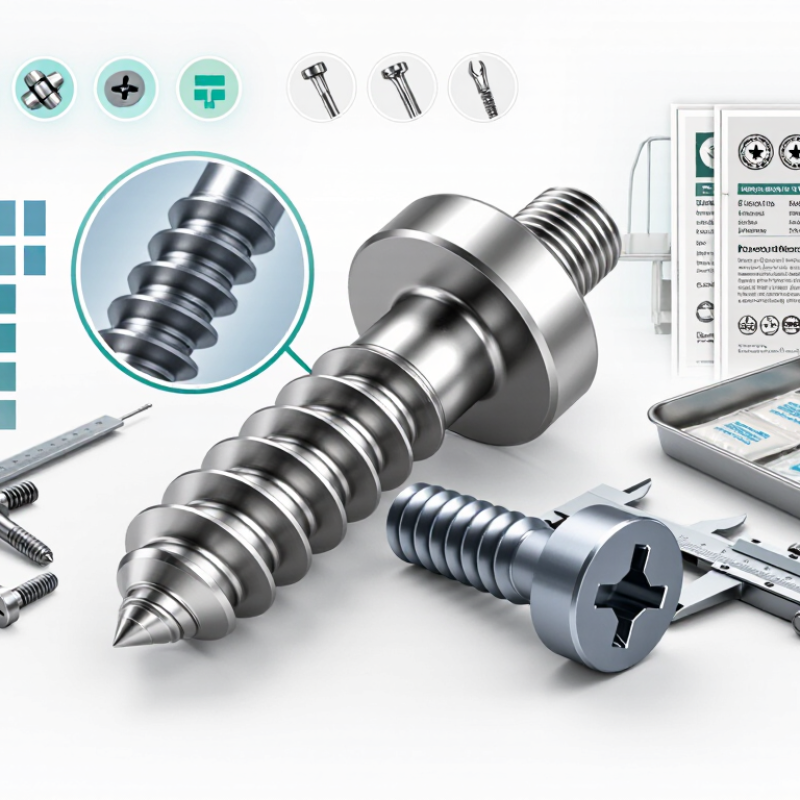
Self-tapping bone screws have a cutting tip or flute that forms internal threads as the screw enters bone. They usually pass through a prepared pilot hole. This design can reduce the need for a separate tapping step during orthopedic procedures. It may also shorten instrument handling time. However, “self-tapping” does not mean “no preparation.” Dense cortical bone may still require drilling, depth measurement, or controlled tapping.
During insertion, the sharp leading edges remove small amounts of bone and create a matching thread path. The screw then advances with steady torque from a compatible driver. Thread design matters. Fine threads may suit harder cortical bone, while deeper threads can improve purchase in softer cancellous bone. Selection depends on anatomy, fracture pattern, screw diameter, and fixation goals. A useful detail is tactile feedback: excessive resistance can indicate an undersized pilot hole, poor alignment, or damaged threads. Forcing the screw is risky.
Global buyers should assess suppliers through material certificates, dimensional inspection, sterilization controls, and traceable batch records. Product documentation should state alloy, thread profile, driver interface, and applicable surgical instructions. Quality-system certification is helpful, but it does not replace independent verification. The term “self-tapping” can be oversimplified. Surgeons still need training, imaging, and judgment for each case. Even well-designed screws may fail when placement, torque, or patient factors are unsuitable.
Top Self Tapping Bone Screws Suppliers for Global Buyers
Key Materials, Designs, and Medical Applications
Self-tapping bone screws reduce drilling steps during fixation procedures. Their fluted tips cut threads inside prepared bone. Titanium alloys remain popular because they combine strength, corrosion resistance, and imaging compatibility. Stainless steel offers greater rigidity and lower material cost. However, stiffness can influence stress distribution around the implant.
Grand View Research valued the global orthopedic implants market at approximately USD 45 billion in 2023. Its 2024 report also projects continued growth through 2030. These figures indicate strong demand, but market size alone cannot identify a reliable supplier. Buyers should review ISO 13485 certification, material traceability, fatigue testing, and sterilization controls. Documentation matters.
Design selection depends on anatomy and surgical purpose. Coarse threads may improve purchase in softer bone, while finer threads can support dense cortical bone. Cannulated versions assist guide-wire placement. Locking screw heads provide angular stability within compatible plates. Common applications include trauma fixation, spinal procedures, small-joint repair, and selected dental reconstruction.
A 2023 report from MarketsandMarkets identified titanium and titanium alloys as major segments in orthopedic biomaterials. Yet, alloy choice is not the whole decision. Surface finish, thread geometry, driver compatibility, and pull-out testing deserve equal attention. I have seen specifications look impressive while leaving fatigue data unclear. That gap needs questioning. No design is universally superior. Suppliers should provide application-specific evidence, not only polished catalogs.
When evaluating self-tapping bone screw suppliers, examine evidence before sales claims. Grand View Research valued the global orthopedic implants market at approximately USD 49.6 billion in 2023. Its forecast also indicates steady growth through 2030. This expansion increases supplier choice, but not necessarily supplier quality.
Ask for ISO 13485 certification, recent audit findings, and device-specific quality records. Confirm the screw’s alloy, thread geometry, coating, and sterilization method. Request batch records showing dimensional checks, torque testing, and fatigue performance. Traceability matters. Each lot should connect raw materials to final inspection and shipment. FDA quality-system guidance also emphasizes documented controls, complaint handling, and corrective actions.
A reliable supplier should provide surgical-use data, not only laboratory photographs. Review validation reports for self-tapping performance in relevant bone models. Check whether testing reflects hard cortical bone and softer cancellous bone. The 2024 Global Orthopedic Implants Market report by Fortune Business Insights describes rising demand for fixation devices, making capacity verification important. Ask about lead times during peak orders and inspect packaging samples directly. A clean package can still hide weak process control. I have seen buyers overvalue certificates and undervalue change-notification procedures. That is a mistake worth revisiting. Suppliers should explain how they manage material changes, tooling wear, nonconforming lots, and post-market complaints. Ask for evidence, not confidence.
Top Self Tapping Bone Screws Suppliers for Global Buyers
Reliable suppliers treat certification as evidence, not decoration. Buyers should request a current ISO 13485 certificate, issued by an accredited body. This standard supports controlled medical device production and documented risk management. Relevant material and biological evaluations may include ASTM F543 and ISO 10993 requirements. Requirements can differ by destination market. A certificate alone never proves consistent screw performance.
Experienced suppliers maintain traceability from titanium or stainless steel batches to finished cartons. Each lot should have records for thread dimensions, tapping force, torque, hardness, and surface finish. Microscopic inspection can reveal burrs around the cutting flute. Packaging checks should confirm seal integrity and clear lot identification. These details matter during surgical planning and later investigation.
Tips: Ask for sample inspection reports, not only certificates. Review calibration records for torque equipment. Confirm sterilization responsibilities before purchasing. Request a controlled change-notification process. Audit responses should include evidence, dates, and responsible personnel. A factory may pass one audit and still show weak follow-up controls. That deserves careful reflection. Suppliers should also explain nonconforming-product handling, complaint reviews, and corrective actions in plain language. Consistent communication is a quality control, too.
This reference chart maps widely recognized standards and regulatory frameworks to their primary relevance for metallic bone screw suppliers. The index reflects the number of directly relevant control domains covered by each framework, not the performance of any specific company or brand.
Global buyers should evaluate self-tapping bone screw suppliers beyond the quoted unit price. Ask for material certificates, dimensional inspection records, and batch traceability. Titanium and stainless steel options may serve different surgical requirements, so technical data must match the intended application. Confirm thread design, driver compatibility, packaging, and sterilization status before placing an order. A supplier with documented quality systems, such as ISO 13485 certification, offers stronger evidence of controlled production. Still, certificates alone are not enough.
Tips: Request samples from the same production line used for bulk orders. Compare thread sharpness, surface finish, insertion performance, and packaging labels. Clarify minimum order quantities, tooling charges, payment terms, and replacement procedures. I would also request recent inspection reports. Old documents can create false confidence.
International pricing often changes after freight, insurance, customs handling, and currency conversion are added. Ask suppliers to separate product costs from shipping charges and state the delivery term clearly. Lead times should include production, inspection, and export preparation. For urgent medical orders, confirm whether partial shipment is possible. Import rules differ by destination, and the buyer remains responsible for checking local device requirements. A realistic purchase plan should include buffer stock, although excessive inventory can increase storage costs and product risk. One detail is easy to miss: outer cartons may need specific labels or moisture protection. Recheck everything.
| Supplier Category | Typical Manufacturing Region | Common Screw Materials | Typical Product Range | Common Standards and Documentation | Typical MOQ | Indicative Unit Price* | Typical Production Lead Time | Common Export Terms | Key International Buying Considerations |
|---|---|---|---|---|---|---|---|---|---|
| Specialized orthopedic implant manufacturer | North America, Western Europe, East Asia | Ti-6Al-4V ELI 316L stainless steel | Self-tapping cortical, cancellous, locking, and cannulated bone screws; sterile or non-sterile options | ISO 13485 quality management system; ISO 5832 material specifications; ISO 10993 biological evaluation; applicable national medical-device registration | 25–100 pieces for standard catalog items; higher for customized products | US$8–35 per piece | 4–10 weeks, depending on validation and sterilization requirements | FCA, FOB, CIF, DAP | Request material certificates, dimensional inspection reports, sterilization validation, shelf-life data, and regulatory documentation for the destination market |
| OEM/ODM orthopedic component supplier | East Asia, South Asia, Central and Eastern Europe | Titanium alloy Stainless steel | Custom thread profiles, head geometries, drive recesses, lengths, coatings, and packaging configurations | ISO 13485 commonly requested; ISO 9001 may apply to general manufacturing; technical drawings, inspection plans, and process validation records | 100–500 pieces for new tooling or custom specifications | US$3–18 per piece | 6–14 weeks for first production; 3–8 weeks for repeat orders | EXW, FCA, FOB, CIF | Confirm ownership of drawings, tooling charges, engineering-change procedures, first-article approval, and minimum annual purchase commitments |
| Precision medical machining supplier | United States, Germany, Switzerland, Japan, Taiwan | Titanium alloys Cobalt-chromium alloys 316L stainless steel | Small-batch self-tapping screws, complex cannulated designs, prototypes, and highly controlled custom components | ISO 13485 or equivalent controlled processes; material traceability; coordinate-measuring inspection; surface-finish and burr-control records | 10–50 pieces for prototypes; 50–250 pieces for production batches | US$15–60 per piece | 5–12 weeks, including programming, inspection, and approval | EXW, FCA, CPT, DAP | Best suited to demanding tolerances and low-volume programs; freight and inspection costs can materially affect landed cost |
| High-volume medical fastener producer | China, India, Southeast Asia, Eastern Europe | Titanium alloy 316L stainless steel | Standard self-tapping cortical and cancellous screws in frequently ordered diameters and lengths | ISO 13485 where medical-device production is covered; batch traceability; certificates of analysis; inspection and packaging records | 500–5,000 pieces, depending on size and packaging | US$1.50–8 per piece | 3–8 weeks for established designs | FOB, CIF, CFR, DDP where legally and operationally appropriate | Lower unit prices usually require larger volumes; verify production-line segregation, surface treatment, packaging integrity, and lot traceability |
| Sterile implant and procedure-set supplier | North America, Western Europe, East Asia | Titanium alloy 316L stainless steel | Pre-sterilized self-tapping screws supplied individually or in procedure-specific trays and kits | ISO 13485; ISO 11135 or ISO 11137 sterilization validation, as applicable; ISO 11607 packaging validation; shelf-life and labeling records | 50–250 pieces per configuration; kit quantities vary | US$12–45 per sterile piece | 6–16 weeks, including sterilization, packaging, and release testing | FCA, FOB, CIF, DAP | Check residual sterilization limits, sterile-barrier performance, expiration dating, language requirements, and import registration before shipment |
| Regional authorized distributor or medical-device importer | North America, Europe, Middle East, Latin America, Asia-Pacific | Products sourced from qualified implant manufacturers | Catalog sizes, urgent replenishment quantities, procedure kits, and local inventory support | Destination-country registration, importer authorization, product labeling, declarations of conformity, and supplier quality agreements | 1–25 pieces for stocked items; case-pack quantities may apply | US$15–70 per piece | 1–10 business days from local stock; 4–12 weeks for backorders | DAP, DDP, local-delivery terms | Higher prices may provide faster delivery, local regulatory support, returns handling, and smaller order quantities |
| Research, prototype, and low-volume supplier | North America, Europe, East Asia | Titanium alloy Stainless steel | Non-sterile prototypes, anatomical-model components, test articles, and engineering samples | Material certificates, dimensional reports, drawings, and process records; medical-device certification may not cover the final clinical use | 1–20 pieces | US$20–100 per piece | 2–8 weeks | EXW, FCA, courier delivery | Suitable for development only unless the supplier and product have completed the regulatory controls required for clinical use |
They have cutting flutes that form internal threads while entering bone. They usually require a prepared pilot hole.
Not always. Dense cortical bone may still require drilling, depth measurement, or controlled tapping.
Sharp leading edges remove small amounts of bone during insertion. The screw then follows the newly formed thread path.
It may indicate a small pilot hole, poor alignment, or damaged threads. Do not force the screw.
Fine threads may suit harder cortical bone. Deeper threads can improve purchase in softer cancellous bone.
Request material certificates, dimensional reports, sterilization records, and traceable batch information. Samples matter too.
Reports should cover thread dimensions, tapping force, torque, hardness, and surface finish. Microscopic flute inspection can reveal burrs.
Separate product, freight, insurance, customs, and currency costs. Confirm delivery terms and production lead times.
Confirm alloy, thread profile, driver interface, packaging, sterilization status, and destination-market requirements. Recheck everything.
Self Tapping Bone Screws are specialized orthopedic fasteners designed to create their own pathways in bone during insertion, reducing the need for separate tapping procedures and helping improve surgical efficiency. This summary explains their working principles, common materials such as titanium alloys and stainless steel, thread and head designs, and applications in fracture fixation, spinal procedures, and reconstructive surgery. Selecting the appropriate screw requires careful attention to biocompatibility, mechanical strength, corrosion resistance, dimensional accuracy, and compatibility with surgical instruments.
For global buyers, evaluating suppliers involves reviewing manufacturing capabilities, product consistency, traceability, sterilization options, and quality management systems. Reliable suppliers should provide appropriate certifications, inspection records, technical documentation, and evidence of compliance with applicable medical-device requirements. Buyers should also compare minimum order quantities, customization services, lead times, packaging, shipping arrangements, payment terms, and total landed costs. A structured assessment helps healthcare distributors and medical institutions secure dependable products while supporting patient safety and long-term supply stability.
