Osteora Osteora

What Are the Top Cancellous Screw Types in 2026?

Time:2026-09-29 Author:Sienna
0%

Choosing among the top Cancellous Screws in 2026 requires more than comparing diameter, length, or surface finish. Surgeons must examine bone quality, fracture pattern, thread design, and the patient’s healing demands. A short screw may suit dense metaphyseal bone, while a longer partially threaded screw can capture a fragile fragment more securely. The operating field often tells the truth.

Orthopaedic trauma specialist Dr. William M. Ricci has stated, “Fixation should serve biology, not fight it.” This principle remains highly relevant when evaluating fully threaded, partially threaded, cannulated, and locking cancellous screw systems. Each type offers practical advantages. None is universally superior. The best choice depends on compression needs, purchase depth, insertion control, and the surrounding soft tissue.

This guide compares leading cancellous screw types expected to shape clinical discussions in 2026. It considers thread geometry, core strength, washer compatibility, corrosion resistance, and imaging visibility. It also examines how modern coatings and instrument systems may influence surgical efficiency. Yet laboratory performance does not always predict bedside results. That uncertainty deserves attention.

A screw that looks ideal on a specification sheet may be difficult to place through a small incision. Another may provide strong purchase but create excessive compression. These details matter beside a real operating table. Evidence, surgical experience, and patient-specific planning must work together. Readers should also remember that implant selection requires professional judgment, current clinical guidance, and careful review of each manufacturer’s validated indications.
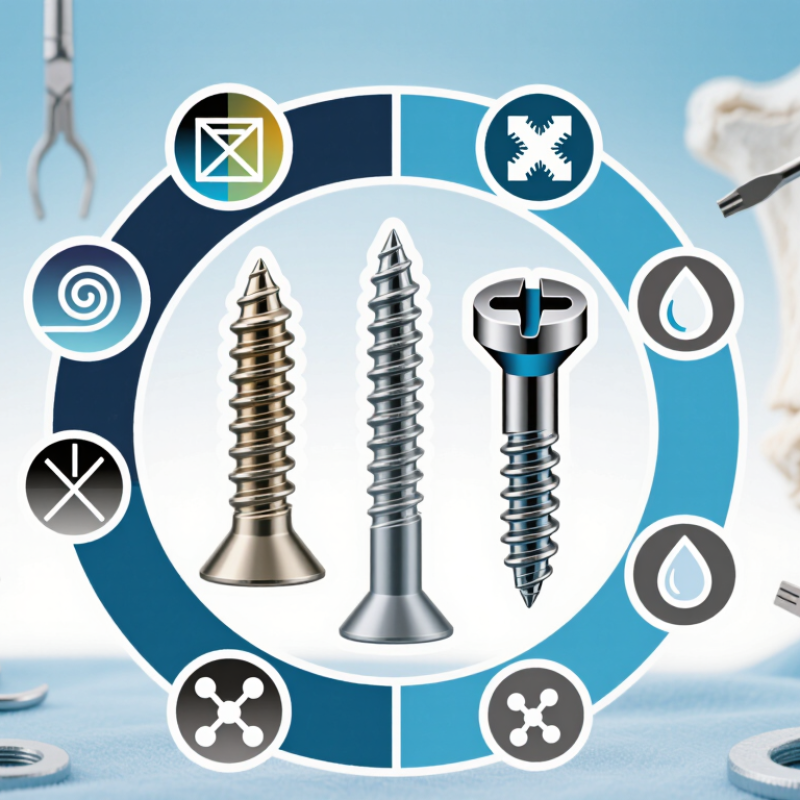
What Are the Top Cancellous Screw Types in 2026?

What Are Cancellous Screws and How Are They Classified?

Cancellous screws are designed to gain purchase in cancellous bone, the porous, honeycomb-like tissue found near the ends of many bones. Their threads are typically deeper and more widely spaced than those on screws made for dense cortical bone. This shape helps engage softer bone. It does not guarantee fixation; bone quality and placement still matter.

Classification depends on several features. Partially threaded screws have a smooth section near the head and can draw bone fragments together as they tighten. Fully threaded screws engage bone along most of the shaft and may be selected when compression is not the main goal. Diameter and length also vary, matching the screw to the bone and fracture pattern. That matters. Cannulated versions have a hollow center, allowing placement over a guidewire; solid screws do not. Some designs are self-tapping, while others require a prepared thread. Not always. The right category depends on the procedure, anatomy, and imaging findings, rather than a single “top” type. Terminology can vary between clinical settings, so the product’s specifications should be checked carefully.

Which Cancellous Screw Types Are Leading in 2026?

Which cancellous screw types are leading in 2026? The answer depends on bone quality, fracture pattern, and reduction goals.

Partially threaded screws remain widely used for interfragmentary compression. Their smooth shaft lets the near fragment glide while the threads grip deeper cancellous bone. Headed versions help when controlled compression and a broad bearing surface are needed. Washers may protect fragile metaphyseal bone, but they can irritate nearby soft tissue.

Headless compression screws continue gaining attention in articular and periarticular fixation. They sit beneath the surface, reducing prominence around joints. Fully threaded screws remain valuable when positional stability matters more than compression. Cannulated designs support guidewire placement and may improve trajectory control under imaging.

However, cannulation can reduce core strength in some diameters. That trade-off deserves careful review.

Surgeons also compare titanium and stainless steel according to strength, imaging behavior, and patient factors. Thread pitch, screw length, diameter, and insertion torque can change fixation quality significantly. A 6.5-millimeter screw may suit dense metaphyseal bone, while smaller sizes can reduce damage in limited anatomy.

Still, no design fits every case. Clinical judgment remains imperfect, especially when bone quality looks better on imaging than during insertion. The tactile feedback can be misleading.

How Do Thread Designs Affect Cancellous Screw Performance?

What Are the Top Cancellous Screw Types in 2026?

How Do Thread Designs Affect Cancellous Screw Performance?

In 2026, cancellous screws remain available with coarse, deep, partial, and fully threaded designs. Their performance depends on bone quality, fracture pattern, and insertion technique. In softer metaphyseal bone, wider thread spacing can improve purchase by engaging more cancellous structure. Deeper threads may increase resistance to pullout, but they can also remove more bone during insertion.

Thread length changes the screw’s mechanical behavior. A partially threaded screw can create lag compression when its threads cross only the far fragment. A fully threaded screw offers continuous fixation and may control motion across a fracture. That difference matters. However, a fully threaded design does not automatically provide better stability. Excessive compression can reduce local blood flow or alter fracture alignment.

Thread roots, pitch, and core diameter also influence strength. A larger core can resist bending, while aggressive threads may improve grip in weak bone. Yet aggressive geometry may raise insertion torque and increase the risk of stripping. In clinical practice, surgeons should match the design to imaging findings and tactile feedback, not rely on thread appearance alone. I have found this point easy to overlook: a technically advanced thread cannot compensate for poor trajectory or inadequate fixation length. Bone preparation, measured depth, and controlled tightening still matter. Performance claims should be judged against validated testing and clinical evidence, because laboratory pullout results may not fully represent living bone.

What Materials and Head Designs Are Available?

In 2026, cancellous screws are available in several materials, each affecting strength, imaging, and handling. Stainless steel remains valued for its rigidity and familiar surgical performance. Titanium alloy offers lower weight and usually creates less imaging distortion. Some systems use bioabsorbable polymers, but strength can decline during material breakdown. That behavior requires careful case selection and follow-up. Material choice should match bone quality, load demands, and the planned imaging pathway.

Head design also changes how a screw performs. A low-profile head may reduce soft-tissue irritation near a joint. A countersunk head can sit closer to the bone surface when adequate clearance exists. Hexagonal and star-shaped recesses improve driver engagement, although small recesses may strip under excessive force. Cannulated designs help guide placement over a wire and support more controlled positioning. Washer-compatible heads can spread force across fragile cortical bone. Small details matter.

Surgeons should also check thread geometry, head diameter, and driver compatibility together. A useful design on paper may feel awkward in dense or osteoporotic bone. That is easy to underestimate. Clinical judgment still matters more than a single material label or head shape. Manufacturers’ technical data, sterilization instructions, and validated indications should guide final selection.

How Should Surgeons Select the Right Cancellous Screw Type?

Selecting the right cancellous screw begins with the fracture, not the catalog. In 2026, surgeons commonly consider partially threaded, fully threaded, cannulated, headed, and headless designs. Each serves a different mechanical purpose.

Partially threaded screws can create interfragmentary compression when the threads purchase the far fragment. They suit many simple fracture patterns with a suitable near-fragment glide path. Fully threaded screws may provide better control when compression is not desired. They can also support fixation in fragile metaphyseal bone. Cannulated designs help surgeons follow a guidewire through a small incision, but guidewire position must be checked carefully. Diameter, thread length, screw length, and washer use should match bone size and soft-tissue conditions. A screw that is too long may irritate tissue or enter a joint.

Tips: Review radiographs and, when needed, CT scans before selecting the implant. Measure twice. Confirm the thread segment will cross the intended fracture line. Check bone quality, reduction stability, and the planned insertion angle. Follow current surgical guidance and the device’s approved instructions. Do not rely on a familiar size alone.

Clinical judgment still matters. A mechanically attractive screw may be unsuitable after reduction changes. I have seen planning assumptions fail when the cancellous bone is softer than expected. Surgeons should reassess fixation during drilling, tapping, and final imaging. The best choice is the design that provides stable fixation with the least avoidable tissue and joint risk.

FAQS

How do thread designs affect cancellous screw performance?

Coarse, deep, partial, and full threads behave differently in soft metaphyseal bone. Wider spacing may improve purchase. Deeper threads can resist pullout but remove more bone.

When is a partially threaded screw useful?

It can create lag compression when its threads grip the far fragment. This works best with a suitable near-fragment glide path and a simple fracture pattern.

What does a fully threaded screw provide?

It offers continuous fixation and can limit motion across a fracture. However, it does not always create better stability. Excessive compression may affect blood flow or alignment.

Which thread features influence screw strength?

Root shape, pitch, and core diameter matter. A larger core can resist bending. Aggressive threads may grip weak bone but increase insertion torque.

What materials are available for cancellous screws?

Stainless steel provides rigidity and familiar handling. Titanium alloy is lighter and may cause less imaging distortion. Bioabsorbable polymers can lose strength during breakdown.

How can head design affect performance?

Low-profile heads may reduce soft-tissue irritation. Countersunk heads can sit near the bone surface. Cannulated heads support guidewire placement. Washers can spread force across fragile cortex.

How should surgeons select screw length and diameter?

Selection should begin with the fracture and imaging findings. Measure bone dimensions carefully. A screw that is too long may irritate tissue or enter a joint.

What should surgeons reassess during insertion?

Check guidewire position, drilling feedback, tapping resistance, reduction, and final imaging. Soft bone may differ from planning assumptions. I sometimes underestimate that change.

Can thread appearance predict fixation quality?

Not reliably. Trajectory, fixation length, bone preparation, and controlled tightening also matter. A sophisticated thread cannot repair a poor insertion path.

What evidence should support screw selection?

Review validated testing, clinical evidence, technical data, and approved instructions. Laboratory pullout results may not represent living bone perfectly. That limitation matters.

Conclusion

Cancellous Screws are fixation devices designed for use in softer, porous bone, where their specialized thread profile helps achieve stable purchase and controlled compression. They can be classified by thread length, shaft configuration, diameter, cannulation, and whether they are fully or partially threaded. In 2026, leading options include partially threaded screws for compression, fully threaded screws for positional fixation, and cannulated designs that support accurate placement over a guidewire. Locking and variable-pitch configurations may also provide improved control in selected procedures.

Thread geometry strongly influences insertion torque, pullout resistance, compression, and stability. Surgeons can choose among materials such as stainless steel, titanium alloys, and other biocompatible options, while head designs may include countersunk, low-profile, or washer-compatible forms. Selecting the right screw requires evaluating bone quality, fracture pattern, required compression, available working space, imaging needs, and the desired balance between strength and flexibility. Proper sizing and technique remain essential for reliable fixation and minimizing soft-tissue irritation.

Sienna

Sienna

Sienna is a skilled marketing professional with a deep expertise in our company’s core products and services. With a passion for innovation and detail, she plays a pivotal role in crafting insightful blog posts that not only highlight the unique features of our offerings but also provide valuable......