Herbert Screws are small, headless compression implants designed for precise fixation in fractures, especially within the scaphoid, foot, ankle, and hand. Their internal threads advance at different pitches, drawing bone fragments together as the screw is inserted. The buried design leaves no conventional screw head above the bone surface. That detail matters near cartilage, where a prominent implant can irritate tissue or restrict movement.
The need is substantial. The World Health Organization reported that about 1.71 billion people live with musculoskeletal conditions worldwide. Market reports also show steady growth in orthopedic trauma devices, although estimates differ because companies classify screws, plates, and fixation systems differently. These figures indicate demand, not proof that one implant suits every fracture. X-rays, computed tomography, bone quality, fracture stability, and surgical access still guide selection.
Orthopedic surgeon Timothy Herbert and James Fisher introduced this screw concept in their landmark 1984 scaphoid study. They described the aim as achieving “compression across the fracture site” while placing the implant beneath the articular surface. That principle remains clinically relevant. Yet it is easy to oversimplify. A Herbert screw does not automatically create healing. Poor reduction, incorrect length, weak bone, or excessive compression can compromise the result. Small details matter.
This article examines how Herbert Screws work, where surgeons use them, and what their limitations mean in practice. It also considers evidence from peer-reviewed studies and guidance from professional orthopedic organizations. Readers should treat the discussion as educational, not as a substitute for individualized surgical judgment.
What Are Herbert Screws?
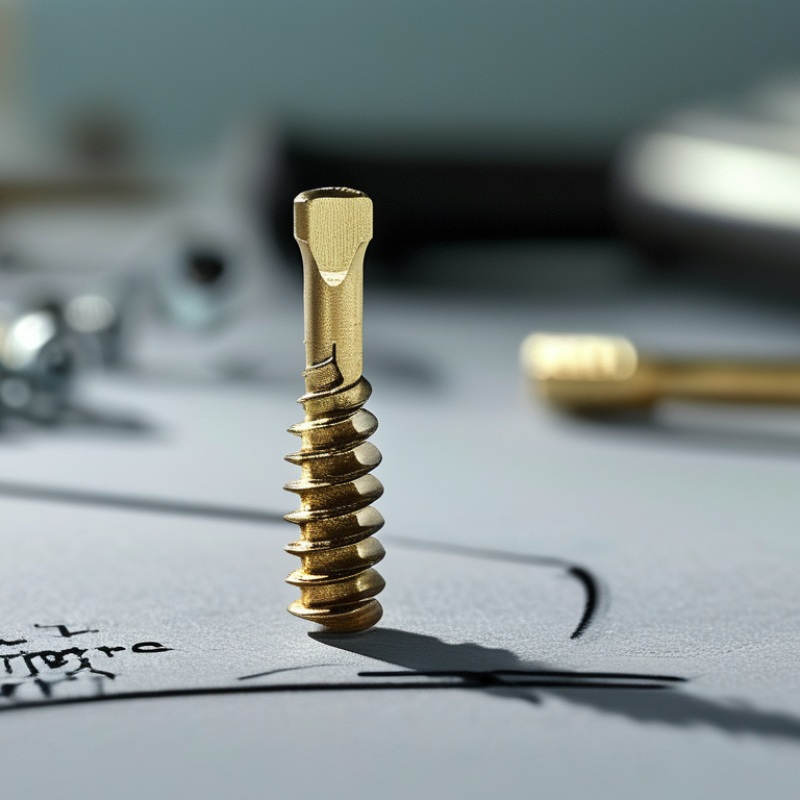
Herbert screws are headless compression screws used to stabilize certain bone fractures. Their defining feature is a screw body without a prominent head. This design allows the implant to sit beneath the bone surface. It can reduce irritation near cartilage, tendons, or tight joint spaces.
A Herbert screw usually has different thread pitches along its shaft. The changing pitch pulls two fracture fragments together as the screw advances. This creates interfragmentary compression, which may support healing when the fracture surfaces are properly aligned. Many versions are cannulated. A surgeon can pass the screw over a thin guidewire, helping control its position during surgery. The screw may be made from surgical-grade metal or another approved implant material.
These screws are commonly considered for scaphoid fractures, small joint injuries, and selected fractures involving short bones. They are not suitable for every fracture. Poor bone quality, severe fragmentation, or an unstable fracture pattern may require another fixation method. Careful imaging and surgical planning are essential. The surgeon checks the fracture line, screw length, and depth before insertion. A screw placed too deeply can damage nearby structures. One placed too shallow may irritate soft tissue. Healing also depends on blood supply, stability, and patient recovery habits. Even with accurate placement, delayed union or nonunion can occur. The technique looks simple, but small errors matter.
Key Design Features and Materials of Herbert Screws
What Are Herbert Screws and How Are They Used?
Herbert screws are headless compression screws used to stabilize small bone fragments and selected joint fractures. Their defining feature is a differential thread pitch. The threads near the tip advance faster than those near the entry point, drawing the fragments together as the screw is inserted. This creates compression without leaving a prominent screw head under cartilage or soft tissue.
Many Herbert screws are cannulated, allowing a guidewire to control placement during fluoroscopic imaging. Their headless shape supports smoother joint movement and may reduce irritation during healing. Designs can include a tapered tip, cutting flutes, and a recessed drive area. These details help the screw enter prepared bone and sit beneath the surface.
Small differences matter.
Titanium alloy is common because it combines strength, corrosion resistance, and relatively low weight. It also produces less imaging distortion than some stainless steels, although the final choice depends on the fracture and imaging needs.
Stainless steel provides high strength and familiar handling. Bioabsorbable materials may be considered in selected cases, but their performance and degradation require careful evaluation.
In practical surgery, the screw length must cross the fracture while avoiding the opposite joint surface. A screw that is too short may fail to compress adequately. One that is too long can damage nearby tissue. The design is elegant, but not magic. Bone quality, insertion angle, reduction accuracy, and postoperative protection still influence healing.
Judgement remains essential.
How Herbert Screws Work in Fracture Fixation
What Are Herbert Screws and How Are They Used?
How Herbert Screws Work in Fracture Fixation
A Herbert screw is a headless, cannulated screw designed to compress a fracture. Its threads have different pitches at each end. The wider pitch advances faster, pulling one bone fragment toward the other. This creates interfragmentary compression while the screw sits beneath the bone surface.
Small guidewires usually establish the path first. The surgeon then drills, measures, and inserts the screw under fluoroscopic control. The recessed design reduces prominence near cartilage and tendons. This matters in scaphoid, radial head, phalangeal, and small joint fractures. Stable compression can support earlier controlled movement, although fixation must match bone quality and fracture pattern.
Clinical evidence is encouraging, but not uniform. A 2023 systematic review in EFORT Open Reviews reported union rates above 90% in many scaphoid fixation series. It also noted differences in fracture location, surgical technique, and follow-up quality. A review in the Journal of Orthopaedic Trauma similarly found strong union outcomes, but warned that screw placement and rotational stability remain critical. The screw is not magic. Poor reduction can leave a visible gap despite good hardware.
In practice, surgeons check screw length carefully. Excessive length may irritate nearby tissue or enter a joint. Insufficient purchase may weaken compression. The best result depends on accurate reduction, central placement, stable bone contact, and postoperative protection. Small technical errors can matter.
Common Surgical Uses for Herbert Screws
Herbert screws are headless compression screws designed to sit beneath the bone surface. Their threads create compression across a fracture while reducing irritation to nearby tendons and cartilage.
The American Academy of Orthopaedic Surgeons reports that scaphoid fractures represent about 60% to 70% of all carpal fractures. This explains why scaphoid fixation remains a major use.
Surgeons commonly use Herbert screws for scaphoid waist and proximal-pole fractures, especially when displacement threatens blood supply. They also treat selected fractures of the metacarpals, phalanges, radial head, and small osteochondral fragments.
In some cases, surgeons use them during corrective osteotomies or limited joint fusion. AO Surgery Reference emphasizes accurate screw length, central placement, and stable compression. A screw that is slightly proud can damage cartilage. Small errors matter.
Clinical studies generally report high union rates after carefully selected scaphoid fixation, often above 90%, but outcomes vary with fracture location, delay, smoking, and vascular compromise. Those figures should not become promises. A 2022 systematic review in the Journal of Hand Surgery found that fixation method and patient factors both influence healing time. Surgeons still debate the best approach for difficult proximal-pole injuries. Imaging quality can also mislead. CT planning may reveal fracture geometry that plain radiographs miss. The operation is precise, but not mechanical.
Benefits, Limitations, and Possible Complications
Herbert screws are headless, cannulated screws designed to compress fracture fragments. They are commonly used in scaphoid, hand, foot, and small-joint surgery. Their threads have different pitches, drawing the fragments together during insertion. The screw can sit beneath the cartilage surface. This may reduce prominence and soft-tissue irritation.
Published systematic reviews report scaphoid nonunion healing rates commonly between 80% and 95% after fixation, although results vary with grafting, fracture location, and smoking status. A 2022 review in the Journal of Wrist Surgery linked poorer outcomes with proximal-pole injuries and delayed treatment. The main benefit is controlled compression. Stable fixation can support earlier rehabilitation, but it does not guarantee union. That assumption is too neat.
Limitations begin with surgical accuracy. A misplaced screw may penetrate the joint, damage cartilage, or fail to compress the fracture. Complications include nonunion, screw migration, infection, nerve irritation, tendon injury, and later arthritis. Removal can also be difficult when the screw is deeply buried. Data from the American Academy of Orthopaedic Surgeons consistently identify smoking and poor bone quality as important risk factors for impaired healing. In my view, the screw is only one part of the result. Fracture biology, alignment, imaging, and patient follow-up matter just as much. Small errors matter.
What Are Herbert Screws and How Are They Used?
Herbert screws are headless, partially or fully threaded compression screws designed to stabilize fractures while allowing the implant to sit below the bone surface. The chart shows common diameter ranges used for different orthopedic applications; exact selection depends on anatomy, fracture pattern, bone quality, and surgical technique.
Benefits
Headless placement reduces prominence beneath the joint surface, while differential threading can generate interfragmentary compression and provide stable fixation.
Limitations
The technique requires accurate guidewire positioning, adequate bone stock, and appropriate fracture reduction. Malposition or insufficient compression can compromise fixation.
Possible Complications
Potential problems include loss of reduction, nonunion, implant migration or breakage, cartilage penetration, infection, and irritation related to the surgical approach.
Diameter ranges are representative clinical ranges for headless compression screw applications, not fixed standards. Device dimensions and indications vary by anatomy and implant system.
Conclusion
Herbert Screws are specialized orthopedic fixation devices designed to stabilize small bone fractures and support reliable healing. Their distinctive headless, variable-pitch structure allows the screw to sit beneath the bone surface while generating compression between fracture fragments. Commonly made from surgical-grade metal or other biocompatible materials, these screws are available in different sizes to match the anatomy and demands of the injury.
During fixation, the screw’s changing thread design helps draw the separated bone pieces together as it advances, reducing movement and encouraging union. Herbert Screws are frequently used for fractures involving the wrist, hand, foot, ankle, and other small or joint-related bones. Their low-profile design may reduce irritation to surrounding tissues and preserve joint movement, but they require accurate placement and appropriate patient selection. Possible limitations and complications include difficulty with insertion or removal, loss of fixation, delayed healing, infection, or irritation if the screw is not fully recessed.
 Osteora
