Osteora
Choosing among Top Orthognathic Surgery Implant Suppliers in China calls for more than comparing prices or polished catalogs. Orthognathic Surgery Implants must fit demanding clinical workflows, from preoperative planning to secure fixation and postoperative review. Buyers may assess titanium plates and screws, dimensional options, manufacturing consistency, packaging, and traceability. Ask for current technical documentation, material specifications, and evidence supporting any quality or sterilization claims. Details matter. A well-designed plate should align with the intended surgical plan; a clear lot record can help teams track products through procurement and use.
Dr. Larry M. Wolford is a recognized oral and maxillofacial surgeon whose work focuses on corrective jaw surgery. A fair paraphrase of his clinical perspective is: “Fixation should support the planned correction while respecting function and healing.” This is a guiding principle, not a supplier endorsement. For Chinese manufacturers, evaluate responsiveness, customization processes, production controls, and how clearly they address questions about product performance. Where possible, review samples and documentation with qualified clinical and procurement professionals. A catalog alone cannot establish suitability. Nor does a low quote tell the whole story. Supplier comparisons can still feel imperfect, especially when public information varies between companies; that uncertainty deserves attention rather than assumption. The strongest introduction to a supplier is therefore a verifiable record, specific technical answers, and a willingness to discuss limitations plainly.
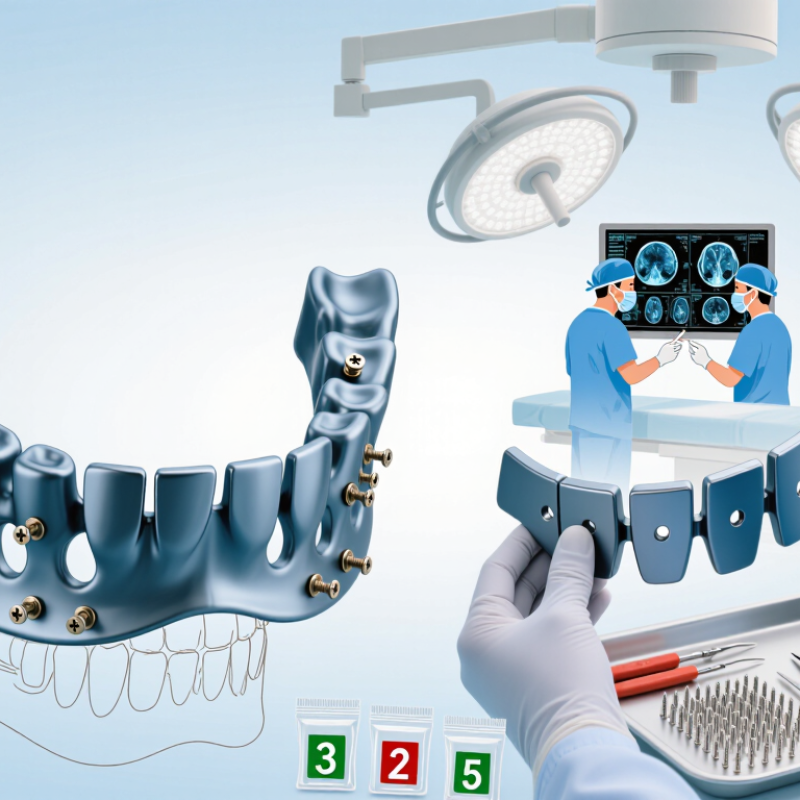
Orthognathic surgery implants are small plates and screws used to hold jaw bones in a planned position after they are surgically repositioned. They are different from dental implants, which replace missing teeth. Most fixation devices are made from medical-grade titanium; selected cases may use resorbable materials. The choice depends on the procedure, bone quality, and the surgeon’s assessment.
During surgery, the clinician shapes or selects plates to fit the contours of the jaw, then secures them with small screws. For example, after a lower-jaw osteotomy, fixation helps keep the bone segments aligned while healing begins. The hardware is usually placed beneath the gum tissue, so patients do not see it. They are not interchangeable. Placement and size matter.
Planning often involves clinical examination and imaging, such as X-rays or three-dimensional scans. These help the surgical team assess bone anatomy and plan movements, but they cannot remove every uncertainty. Swelling, healing, and bite changes vary between patients. Some people may later need an implant removed if it causes persistent discomfort or becomes exposed; others keep it without problems. The details can be less tidy than a diagram suggests, so follow-up checks remain important.
Orthognathic implant catalogs in China commonly include titanium plates and screws for stabilizing repositioned jaw segments. Plate shapes vary: straight, L-shaped, and curved designs can support different fixation points. Small screws secure the plate to bone, with lengths and diameters selected for the patient’s anatomy.
There are several options. Some suppliers also offer resorbable fixation systems, which surgeons may consider when clinically appropriate. Patient-specific plates are another option; they are designed from imaging and surgical plans, but availability and production steps vary.
For procedures such as Le Fort osteotomy, bilateral sagittal split osteotomy, or genioplasty, the required implant configuration depends on bone thickness, segment movement, and the planned fixation. Surgeons and procurement teams should review material specifications, sterilization details, traceability, and instructions for use—not just the catalog image.
A useful detail is how clearly a supplier documents compatible screw sizes and plate dimensions. Catalogs can look reassuring, yet a plate that appears suitable on screen may still require adjustment. That deserves careful review. Device selection should remain with qualified clinical teams, guided by the patient’s needs and the product’s stated indications.
Top Orthognathic Surgery Implant Suppliers in China
How China’s Orthognathic Implant Supplier Market Is Organized
China’s supplier market is better understood as a chain than a single category. It includes implant manufacturers, custom-device producers, authorized distributors, and hospital procurement teams. Products may include fixation plates and screws, alongside patient-specific guides or implants. The China Medical Device Industry Blue Book 2023 estimated the country’s overall medical-device market at about RMB 1.27 trillion in 2022. This broad figure is not an orthognathic-implant market estimate, but it shows the scale of the wider manufacturing ecosystem. Not a simple chain.
For buyers, the key distinction is between standard catalogue products and patient-specific solutions. The latter depend on imaging, design review, production controls, and coordination with the surgical team. China’s NMPA reported 61 innovative medical devices approved in 2023; this signals wider device innovation, not approval of orthognathic products specifically. Supplier comparisons should therefore check the exact product’s registration status, material documentation, traceability, and technical support. The boundary between supplier roles can be blurry, so verify who actually manufactures each component.
Tips: Ask for product-specific documentation and clear lead times. Confirm how design changes are reviewed, and who handles post-delivery questions. Details matter.
| Market Segment | Typical Products or Services | Common Supply Route | Typical Buyer | Practical Evaluation Points |
|---|---|---|---|---|
| Domestic implant manufacturers | Maxillofacial fixation plates, screws, and related instruments for facial bone fixation; product designs and available sizes vary by manufacturer. | Direct sales, regional sales teams, or appointed distributors. | Hospitals, oral and maxillofacial surgery departments, and medical procurement organizations. | Check the applicable Chinese medical-device registration or filing information for the specific product, intended use, materials, sterilization status, and labeling. |
| International manufacturers operating through local channels | Imported fixation systems and associated instruments, subject to the products and registrations available in China. | Local legal entities, authorized distributors, or other compliant import and distribution arrangements. | Hospitals and clinical departments seeking a particular system or established product range. | Confirm China market authorization for the exact model, authorized supply channel, product traceability, and local after-sales support. |
| Medical-device distributors | Distribution of registered products, inventory coordination, delivery, and—in some cases—product training or technical support. | Regional or specialist distribution networks; arrangements differ by territory and product. | Hospitals, public procurement platforms, and healthcare institutions. | Verify the distributor’s relevant qualifications, authorization, storage and transport arrangements, and ability to provide complete product documentation. |
| OEM and contract manufacturing | Manufacturing services for medical-device businesses under agreed specifications and quality-system controls; the finished product’s regulatory responsibilities depend on the arrangement. | Business-to-business contracts between manufacturers and medical-device brand owners or registrants. | Medical-device companies developing or sourcing products for regulated markets. | Assess manufacturing scope, quality controls, audit access, change management, traceability, and the allocation of regulatory responsibilities. |
| Patient-specific planning and implant services | Where offered and appropriately authorized, case-specific planning or patient-matched devices may complement conventional fixation systems. | Coordination among the clinical team, service provider, and relevant device manufacturer or registrant. | Clinical teams managing cases where individualized planning or devices are considered appropriate. | Confirm the regulatory pathway and authorization for the specific product and use, as well as clinical workflow, design review, manufacturing controls, and delivery timelines. |
| Supporting instruments and procedure sets | Compatible drivers, drills, bending tools, and other instruments used with a fixation system; the included set differs by product line. | Supplied with implants, separately, or through hospital inventory and instrument-management arrangements. | Operating rooms, surgical departments, and hospital sterile-processing teams. | Check compatibility with the intended implant system, reusable-device instructions, maintenance requirements, and sterilization instructions. |
| Hospital procurement and evaluation | Product review, supplier qualification, purchasing, delivery acceptance, and ongoing inventory management. | Hospital procurement processes and applicable public or institutional purchasing channels. | Hospitals and other healthcare institutions. | Compare documented product specifications, registration status, supply reliability, service support, and total procurement requirements; do not rely on price alone. |
Scope note: This is a market-structure overview, not a supplier ranking or a list of verified suppliers. Product availability, regulatory status, materials, and intended use should be checked against current documentation for each specific product. No company or brand names are shown.
Choosing an orthognathic implant supplier calls for more than comparing product catalogs. Buyers should review documented quality systems, material specifications, and controls across each production stage. Ask how titanium or other specified materials are identified and traced from incoming inspection to finished device. Clear records matter.
Dimensional checks should match approved drawings and tolerances. For plates and screws, suppliers can explain how they inspect hole positions, thread form, surface finish, and fit. Request examples of inspection reports and batch records. Check that measurement equipment is calibrated and that rejected parts are recorded, not quietly reworked without review.
Sterilization and packaging controls also deserve close attention. Confirm that validation evidence, seal checks, and lot-level documentation are available for the intended market. A supplier should describe how process changes, complaints, and corrective actions are handled. Paperwork can look tidy while a small process drift goes unnoticed. That is worth questioning. Factory visits or independent audits may add useful evidence, but they do not replace technical review. No checklist is perfect. Compare claims with actual records, and clarify gaps before placing an order.
Top Orthognathic Surgery Implant Suppliers in China
Comparing orthognathic implant suppliers in China takes more than reviewing a catalogue or comparing unit prices. Ask for material specifications, dimensional drawings, and documentation showing how each production batch can be traced. Check whether the supplier’s quality system and product documentation fit the requirements of your intended market. Details matter. Request information on sterilization, packaging integrity, shelf life, and inspection procedures. For plates and screws, confirm hole spacing, screw dimensions, and compatibility with the instruments your clinical team uses. A qualified clinical team should assess whether a design suits its intended application.
Compare suppliers using the same checklist. Record response times, minimum order quantities, lead times, and how the company handles complaints or product changes. Ask for relevant test reports and clear explanations of what they cover; a certificate alone may not answer every technical question. If samples are available, inspect labeling, packaging, and the consistency of supplied documents. A low quotation can look attractive, but missing records or unclear delivery terms may create extra work later. I would not treat a polished presentation as proof of dependable manufacturing. It is easy to overlook small gaps, so note unanswered questions and request written clarification before making a purchasing decision.
Suggested evaluation weights for comparing suppliers of orthognathic plates and screws. These are a buyer-defined framework, not measured supplier scores or market statistics.
Prioritize valid NMPA registration for the relevant products, then verify traceability, supporting clinical and technical documentation, quality controls, and delivery and after-sales capability. Confirm requirements for each product and procurement context.
Catalogs commonly include titanium plates and screws. Plate shapes may be straight, L-shaped, or curved. Some suppliers offer resorbable systems and patient-specific plates.
Clinical teams consider bone thickness, segment movement, and the patient’s anatomy. Screw length and diameter should match the planned fixation and product specifications.
They may be used for Le Fort osteotomy, bilateral sagittal split osteotomy, or genioplasty. The configuration depends on the surgical plan.
Review material specifications, sterilization details, traceability, instructions for use, compatible screw sizes, and plate dimensions. Images are not enough.
Ask for records connecting incoming titanium or other specified materials to finished devices. Clear batch documentation helps. Records matter.
Ask how they inspect hole positions, thread form, surface finish, and fit against approved drawings and tolerances. Request inspection reports and batch records.
Confirm validation evidence, seal checks, and lot-level documentation for the intended market. Paperwork can look tidy, yet process drift may go unnoticed.
No. They can provide useful evidence, but they do not replace technical review. No checklist is perfect. Clarify gaps before ordering.
Orthognathic Surgery Implants are medical devices used to stabilize the jawbones after corrective surgery and support proper healing. Common options include plates, screws, and fixation systems in different shapes and sizes, selected according to the procedure and the patient’s needs. In China, suppliers may include manufacturers, distributors, and specialized medical-device companies, each offering different product ranges and levels of technical support.
When comparing suppliers, buyers should review material specifications, product consistency, manufacturing processes, and documented quality controls. It is also useful to assess the supplier’s production capacity, traceability practices, delivery reliability, and responsiveness to technical questions. A careful evaluation of these factors can help identify a dependable source of orthognathic implants while ensuring that product selection is guided by qualified healthcare professionals and the requirements of the intended clinical setting.
